

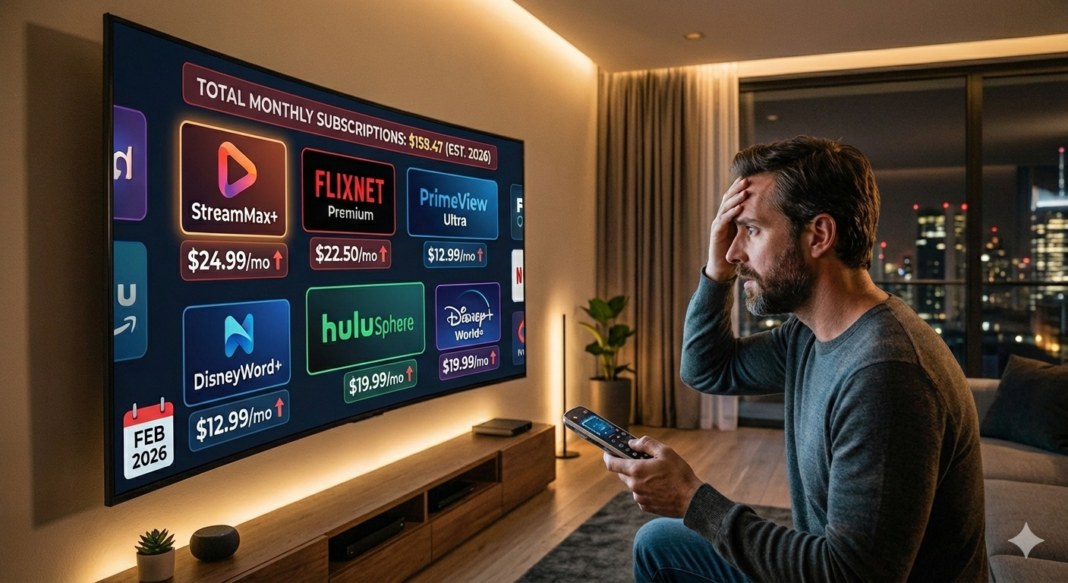
So, word on the street (or, you know, Reddit) is that the streaming bubble might be facing some pressure. Spotify, Crunchyroll, Paramount+ – rumors are circulating about potential subscription price hikes in 2026.
The official explanations often cite “rising content costs,” “inflation,” and the need to demonstrate profitability. But let’s be real: are you actually getting more for your money, or are these increases simply padding executive bonuses?
The internet’s already buzzing with cynicism. People are discussing piracy, rotating subscriptions, and good old-fashioned password sharing. And honestly, can you blame them? It’s becoming increasingly difficult to justify these monthly fees when the content feels fragmented and, well, not always worth the cost.
Let’s dive into the numbers and see if these potential price hikes actually make sense for you.
The Pitch: More Content, Higher Quality… Maybe?
The promise is always the same: with more money, these companies will invest in better content. Paramount+ needs to pay for sports rights, Spotify claims it needs to fairly compensate artists (a point of ongoing debate), and Crunchyroll needs to keep the anime flowing.
But here’s the thing: quantity doesn’t automatically equal quality. A larger library doesn’t guarantee you’ll find something you actually want to watch or listen to.
The Hidden Costs: Beyond the Monthly Fee
The most obvious cost is the increased subscription price. But the real cost is the opportunity cost. What else could you be doing with that money? Investing in your future? Buying something you truly value?
And let’s not forget the hidden costs within the platforms themselves. Ad-supported tiers are becoming increasingly common, but are they really a good deal for you? You might pay less upfront, but you’re sacrificing your time and attention to commercials.
Then there’s the “discovery” problem. With so much content available, finding something worthwhile can feel like searching for a needle in a haystack. You might end up spending more time browsing than actually enjoying the service. Your time is valuable.
The TCO Breakdown: Are You Getting Your Money’s Worth?
Let’s break down the cost-per-hour of “high-quality” entertainment (defined here as content with an IMDb or Rotten Tomatoes score of 7 or higher) across these platforms. We’ll use hypothetical numbers for simplicity, but you can easily substitute your own viewing habits to personalize the calculation.
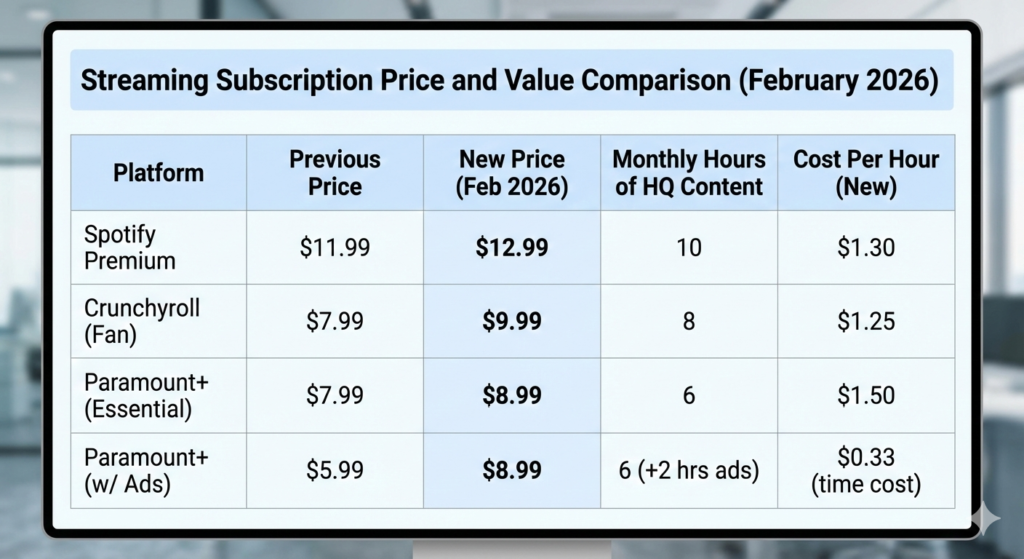
Note: Ad-supported tier cost per hour reflects the estimated value of your time spent watching ads, assuming a minimum wage equivalent. This is a simplified calculation and your personal valuation of your time may vary.
As you can see, even with the potential price hikes, the cost per hour of entertainment could remain relatively low if you’re actively using the service. However, the perceived value is what truly matters. If you’re not actually using the service, or if you’re consistently disappointed by the content, then even a low price is too high.
The Verdict: Rotate, Re-evaluate, or Revolt
My advice? Don’t blindly accept potential price hikes. Take a close look at your viewing habits and ask yourself: am I really getting $13 worth of value from Spotify each month?
Consider rotating your subscriptions. Sign up for Paramount+ when there’s a show you want to watch, then cancel it when you’re done. Embrace the “churn” – these companies are counting on your inertia.
And don’t be afraid to explore alternative options. There are free (and legal) ways to consume content.
Pragmatic Alternative: The Library Card is Your Friend
Remember libraries? They’re still around, and they’re packed with books, movies, and music – all for free. Plus, you get the added bonus of supporting your local community. It’s a win-win.
Ultimately, the decision is yours. But don’t let these companies take you for a ride. Do your research, crunch the numbers, and make an informed choice. Your wallet (and your sanity) will thank you.


[…] Let’s be real: graphics are only half the equation. GTA’s soul lies in its sharp satire, its unforgettable characters, and its emergent, chaotic gameplay. Will this GTA 6 delay allow Rockstar to further refine the narrative, delivering a story that’s both impactful and avoids relying on tired tropes? Will the open world feel truly dynamic, with events unfolding organically and your actions having real consequences? The community is fiercely divided, with some fearing a “woke” GTA and others advocating for more inclusive representation. Rockstar needs to walk a tightrope, delivering a game that’s both progressive and true to the series’ irreverent spirit. Striking that balance is paramount. For more on navigating complex issues and community expectations, consider how other industries are adapting, such as the challenges faced during The Great 2026 Subscription Price Hike. […]