

The LBW Illusion: Cognitive Bias and the Crisis of Cricket’s Judgment
Cricket, a sport celebrated for its complex rules and strategic nuances, is perpetually plagued by the Leg Before Wicket (LBW) law. While the law’s definition seems straightforward, its practical application is anything but. The issue transcends mere technological limitations; it’s deeply intertwined with the psychology of decision-making under pressure, a cognitive labyrinth that challenges even seasoned umpires. The widespread frustration on platforms like Reddit and Hacker News, rife with accusations of bias and skepticism towards the Decision Review System (DRS), isn’t just venting; it signals a genuine erosion of confidence in the game’s fairness.
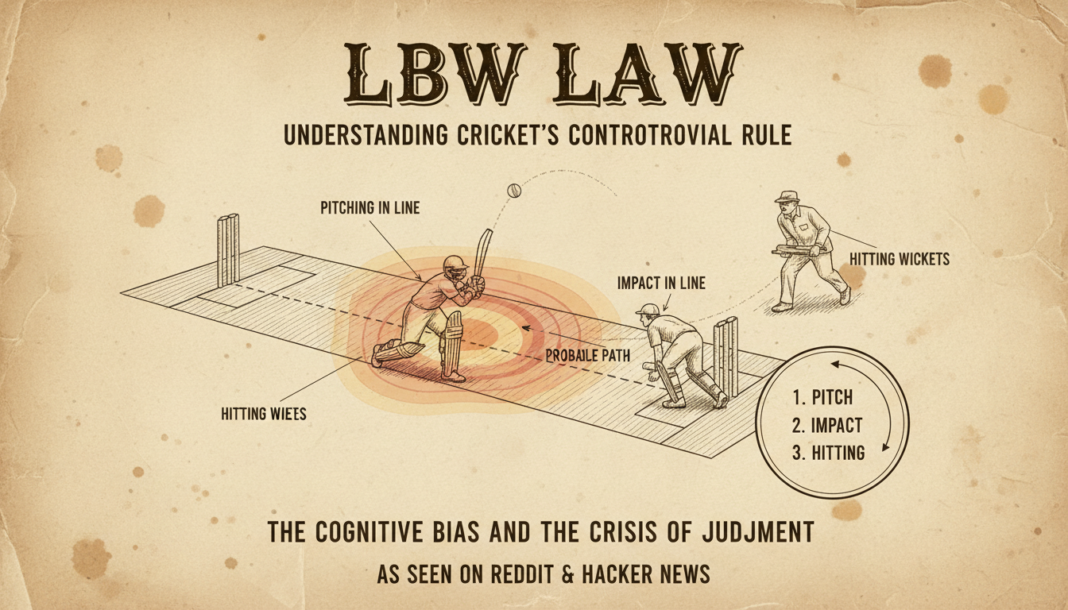
The LBW law stipulates that a batsman can be dismissed if the ball, without contacting the bat or glove, strikes their body and would have proceeded to hit the wickets. This hinges on three critical criteria: the ball’s pitch must be in line with the wickets or on the offside (depending on whether a shot was offered), the point of impact must be in line with the wickets, and the ball must be projected to hit the wickets. The inherent subjectivity in judging these criteria, particularly the ball’s projected trajectory, introduces significant complexity.
The Gaussian Trap: Projecting the Unseen Path
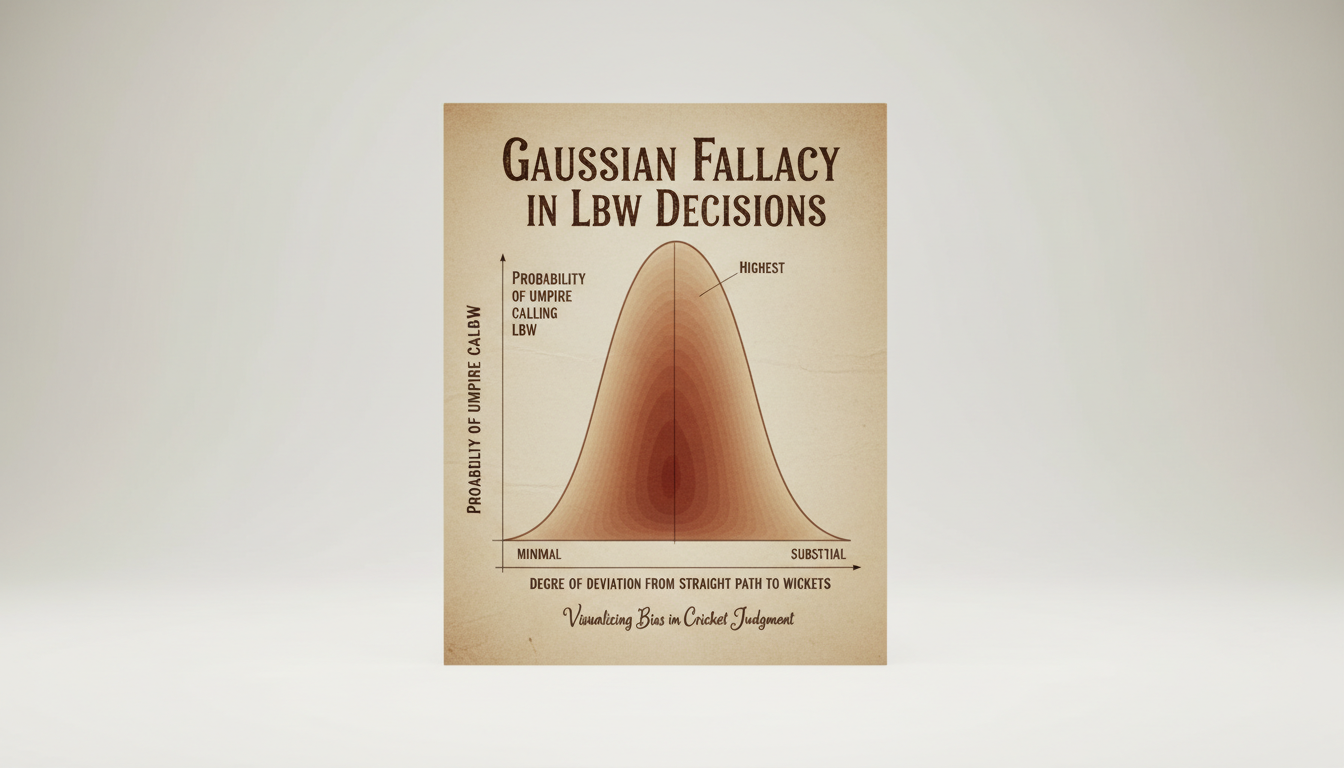
The umpire’s cognitive process is at the heart of the problem. They must extrapolate the ball’s path after it strikes the batsman’s leg, predicting whether it would have continued to hit the wickets. This is where the “Gaussian Fallacy” manifests. Umpires, like all individuals, exhibit regression to the mean. If the ball deviates only slightly from a straight path, they are more inclined to assume it would have corrected its course and hit the wickets. Conversely, a significant deviation makes them more likely to assume it would have missed. This inherent bias towards the average trajectory introduces a systematic error into the decision-making process. It’s a subtle but pervasive influence.
The “availability heuristic” further complicates matters. Recent controversial LBW decisions, endlessly replayed and dissected, become more readily accessible in the umpire’s memory. This can unconsciously bias their assessment of similar situations, leading to inconsistent calls. The pressure from the crowd, the batsman’s reputation, and the match’s significance all contribute to a high-stakes environment where cognitive biases can flourish. This isn’t unlike the pressures faced by traders making split-second decisions in volatile markets.
DRS: A Technological Crutch with Lingering Subjectivity
The Decision Review System (DRS) was implemented to mitigate these errors, offering a technological safety net. However, DRS is not a perfect solution. While ball-tracking technology provides a more objective assessment of the ball’s trajectory, it relies on algorithms and models that are not without their limitations. The “umpire’s call” provision, which upholds the original decision if the ball is projected to clip the wickets, perpetuates the subjectivity inherent in the LBW law. The margin of error in ball-tracking, often cited as around 2.2mm, can be significant when the ball is predicted to just graze the stumps. This effectively hands the decision back to the umpire’s initial, potentially biased, assessment.
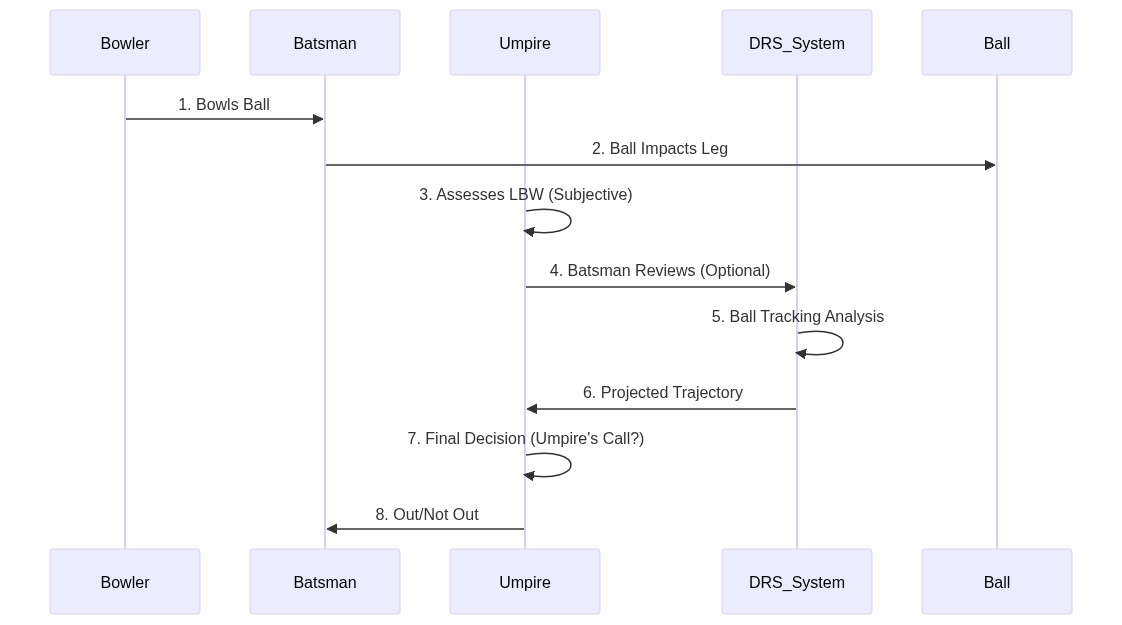
The DRS system, while providing objective data, ultimately relies on human judgment, especially when “Umpire’s Call” is invoked. This creates a bottleneck, where the potential for objective assessment is undermined by the persistence of subjective interpretation. The “Umpire’s Call” was originally intended to protect the umpire’s authority, but it now serves as a lightning rod for criticism.
The Path Forward: Towards Objectivity in 2026
The current system is unsustainable. The constant controversies erode trust in the game and fuel accusations of bias. Expect increasing pressure for a fundamental reform of the LBW law in the coming years. One potential solution is to eliminate “umpire’s call” entirely, relying solely on ball-tracking technology to determine whether the ball would have hit the wickets. This would necessitate refining the algorithms to account for factors like seam movement, variable bounce, and the Magnus effect, but it would significantly reduce the subjectivity inherent in the current system. This refinement could involve incorporating machine learning models trained on vast datasets of ball trajectories, allowing for more accurate predictions.
Another approach could involve incorporating insights from behavioral economics to design interventions that mitigate cognitive biases. For example, umpires could be trained to recognize and counteract the Gaussian Fallacy, or they could be provided with real-time data on their past LBW decisions to identify and correct any systematic errors. Eye-tracking technology could also be used to analyze where umpires are focusing their attention during LBW appeals, providing valuable insights into their decision-making processes.
Ultimately, the goal is to establish a more objective and consistent standard for LBW decisions, one that minimizes the influence of cognitive biases and restores faith in the fairness of the game. Just as advanced analytics are transforming player performance analysis, technology and behavioral science can be leveraged to enhance the integrity of umpiring. The future of cricket depends on it.